
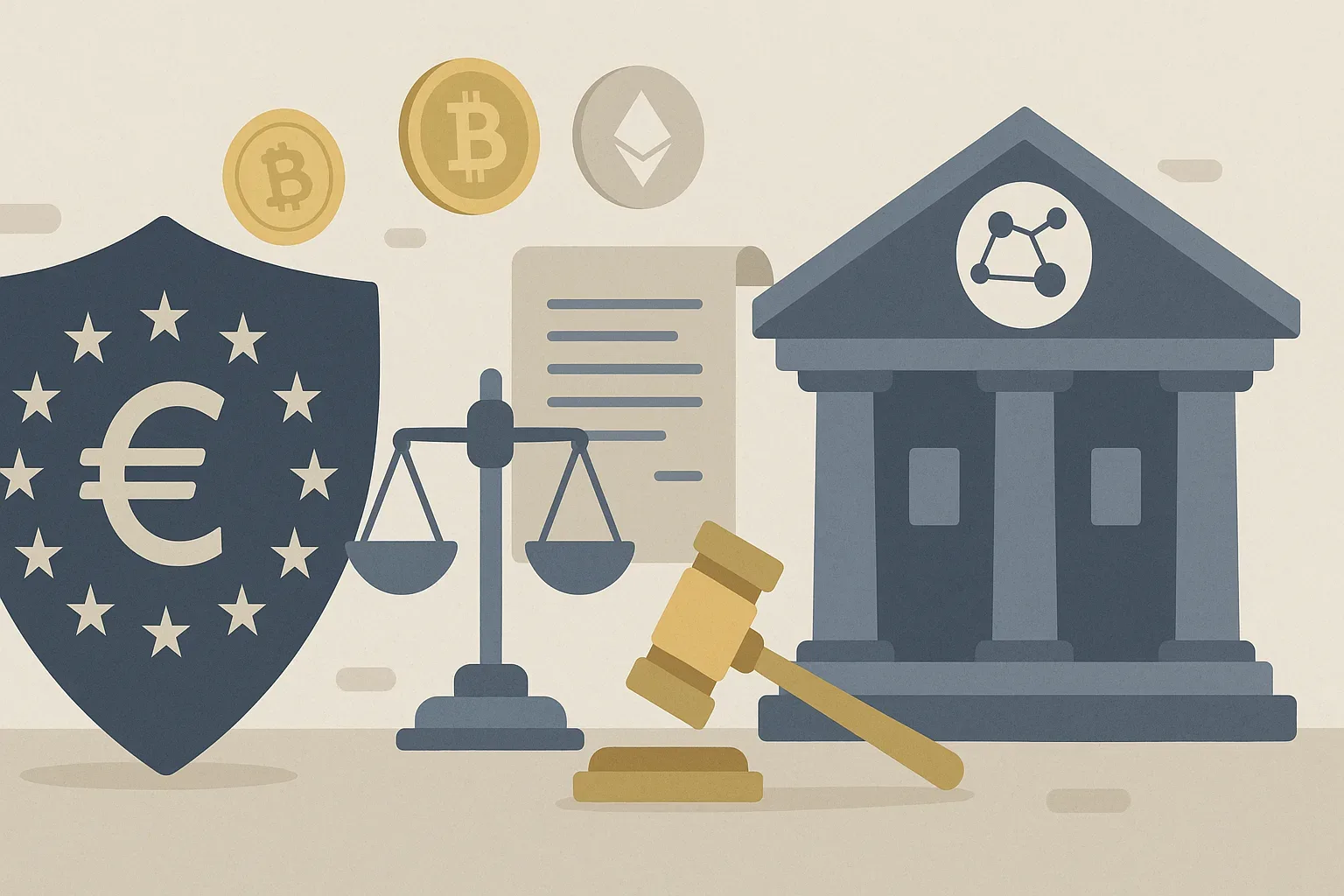
For crypto exchanges, both existing and prospective, MiCA is not merely another piece of regulation; it represents a fundamental shift in their operational, legal, and strategic landscape.
Understanding MiCA: A Comprehensive Overview for Crypto Exchanges
Adopted in 2023, it is designed to address the unique characteristics of crypto markets, which previously operated largely outside traditional financial regulations. The regulation's core objectives are manifold: to foster innovation within the EU while ensuring financial stability, protecting consumers and investors, and preserving market integrity.
Key MiCA Provisions Directly Affecting Crypto Exchange Operations
MiCA distinguishes between asset-referenced tokens (ARTs), e-money tokens (EMTs), and other crypto-assets, each with varying levels of regulatory scrutiny, particularly concerning whitepaper requirements and capital reserves for issuers. This directly affects how exchanges can list and offer these assets. Exchanges acting as CASPs must adhere to stringent organizational requirements, including robust internal governance frameworks, effective risk management, and stringent cybersecurity protocols. They are obligated to prevent market abuse, including insider trading and market manipulation, demanding sophisticated surveillance and monitoring systems. Exchanges offering custody services must segregate clients' crypto-assets and funds from their own, and adopt specific operational resilience measures to ensure the integrity and accessibility of these assets.
The New Regulatory Landscape: Licensing and Authorization Requirements for Exchanges
Under MiCA, operating a crypto exchange within the European Union will require explicit authorization as a Crypto-Asset Service Provider (CASP). The new framework mandates that all entities providing crypto-asset services – including operating a trading platform for crypto-assets, custody and administration of crypto-assets, exchange of crypto-assets for fiat currency or other crypto-assets, and advice on crypto-assets – must apply for authorization from a national competent authority (NCA). Exchanges will need to demonstrate robust governance arrangements, including the fitness and properness of their management body, sufficient capital requirements (which vary based on the services offered), and comprehensive internal controls. The authorization process will be rigorous, requiring detailed applications outlining operational procedures, risk management frameworks, IT systems, and compliance measures.
Enhanced Consumer Protection and Market Integrity Mandates for Crypto Exchanges
MiCA places a strong emphasis on protecting consumers and ensuring the integrity of crypto markets, introducing a host of rules that will fundamentally alter how exchanges interact with their users and conduct business. This means exchanges must provide balanced information, prominently display risks, and avoid overly promotional or exaggerated claims. Exchanges must establish robust complaint handling procedures, providing a clear and accessible avenue for users to address grievances, and are expected to resolve complaints in a timely and fair manner. This includes pre- and post-trade transparency requirements for certain crypto-assets, enhancing visibility into trading activity.
Operational and Technical Compliance Challenges for Exchanges Under MiCA
The regulation demands significant enhancements across various facets of an exchange’s infrastructure. Technologically, exchanges must ensure their platforms are resilient, secure, and capable of supporting advanced monitoring and reporting. This includes robust cybersecurity frameworks to protect against hacks and data breaches, comprehensive data protection measures aligning with GDPR, and auditability features to satisfy regulatory scrutiny. Exchanges will need to upgrade their technology stacks to manage the strict whitepaper requirements for new asset listings, maintain detailed records of all transactions and customer interactions, and facilitate compliant trading activities. Operationally, significant investment will be required in building out compliance departments, hiring legal and regulatory experts, and implementing new internal policies and procedures. Business continuity and disaster recovery plans must be robustly developed and regularly tested to ensure uninterrupted service and protection of client assets. These requirements translate into significant financial outlay for system upgrades, personnel, and ongoing compliance costs, potentially posing a higher barrier to entry for smaller exchanges and favoring `https://cryptomarketplatform.com/blog/centralized-exchanges` with greater resources.
Strategic Implications: Market Consolidation, Innovation, and Investor Confidence
The stringent licensing requirements, capital reserves, and operational compliance costs will likely favor larger, well-resourced exchanges that can absorb these expenditures. Smaller exchanges, particularly those operating across multiple EU jurisdictions, may find it challenging to meet the new standards, potentially leading to market consolidation where larger players acquire or outcompete them. Some might even consider exiting the EU market entirely to avoid the compliance burden, leading to 'regulatory arbitrage' if they relocate to less regulated jurisdictions. Conversely, MiCA's regulatory clarity is expected to attract institutional investors and traditional financial institutions that have historically been hesitant to engage with the crypto market due to perceived risks and lack of legal certainty. This increased institutional participation could spur significant growth and innovation, particularly within compliant frameworks, as firms develop new products and services under a clear rulebook. For legitimate, compliant exchanges, this could translate into a larger, more stable user base and increased trading volumes. Ultimately, MiCA aims to legitimize the crypto sector within the EU financial ecosystem, paving the way for a more mature and trustworthy digital asset market.
MiCA's Position in the Global Regulatory Framework: Comparisons and Cross-Border Impact
MiCA stands as a pioneering, comprehensive, and specific regulatory framework, distinguishing the EU as a frontrunner in establishing a dedicated legal structure for crypto-assets. When compared to other major global jurisdictions, MiCA's approach offers both similarities and significant differences. In the United States, crypto regulation remains fragmented, with the Securities and Exchange Commission (SEC) and the Commodity Futures Trading Commission (CFTC) often asserting overlapping jurisdiction, leading to a less clear-cut environment. The UK, post-Brexit, is developing its own bespoke regime, often taking a more principles-based approach than MiCA's prescriptive rules. Asian markets, such as Singapore and Japan, have also implemented robust frameworks, but MiCA's horizontal application across an entire economic bloc is unique. This means MiCA could effectively set a global standard, influencing how other jurisdictions approach crypto regulation and potentially spurring a wave of similar legislative efforts worldwide. For international crypto exchanges, MiCA presents both challenges and opportunities. Non-EU exchanges serving EU customers must assess their operations to determine if they fall under MiCA’s scope, potentially requiring them to establish an authorized entity within the EU or cease serving EU clients. Conversely, EU-based exchanges that successfully navigate MiCA can leverage their compliant status as a competitive advantage when expanding into other markets, showcasing their adherence to robust standards. The regulation's broad reach also means that even `https://cryptomarketplatform.com/blog/decentralized-exchanges` might face indirect pressure or scrutiny if they facilitate activities that are deemed regulated under MiCA, blurring the lines of purely decentralized operation when interacting with the regulated financial system.
A Roadmap for Crypto Exchanges: Preparing for MiCA Implementation
For crypto exchanges operating or intending to operate within the European Union, preparing for MiCA's implementation requires a strategic and methodical roadmap. This assessment should identify areas of non-compliance and outline the necessary changes. Technology audits will be essential to evaluate cybersecurity frameworks, data protection protocols, transaction monitoring capabilities, and overall system resilience, identifying required upgrades or new integrations. A significant focus must be placed on staff training, ensuring that all employees, from senior management to customer service representatives, understand the new regulatory obligations and their roles in maintaining compliance. Process redesign will be necessary for onboarding, client communication, asset listing, trading operations, and complaint handling to align with MiCA's consumer protection and market integrity mandates. Proactive engagement with national competent authorities can also be beneficial, allowing exchanges to seek clarity on specific provisions and demonstrate their commitment to compliance. Given the phased implementation of MiCA, exchanges should adopt a prioritized approach, addressing the earliest applicable provisions first while systematically preparing for the later requirements. This proactive and structured approach is vital for a smooth transition into the regulated future of crypto exchange operations, transforming compliance from a burden into a strategic advantage.
Conclusion: Navigating the Regulated Future of Crypto Exchanges
The Markets in Crypto-Assets (MiCA) regulation represents a pivotal moment for the global crypto industry, particularly for exchanges operating within or targeting the European Union. Its comprehensive scope, stringent requirements, and aim for harmonized standards across member states signal a definitive shift towards a more regulated, transparent, and secure digital asset landscape. It offers regulatory clarity, which can unlock institutional capital, foster innovation within a defined legal framework, and significantly bolster investor confidence. As the EU leads the way in establishing a holistic regulatory blueprint, MiCA will likely influence global standards, challenging international exchanges to adapt or risk being left behind. Navigating this regulated future requires foresight, adaptability, and a proactive commitment to compliance. Exchanges that embrace MiCA not merely as a set of rules to follow, but as a framework for sustainable growth and enhanced market credibility, will be best positioned to thrive in the evolving digital economy. The era of the 'wild west' in crypto is giving way to a more mature and responsible ecosystem, and MiCA is the compass guiding exchanges through this transformative journey, defining the parameters for secure and trustworthy `https://cryptomarketplatform.com/blog/crypto-def` activities.
What is MiCA and what are its core objectives relevant to crypto exchanges?
MiCA, or the Markets in Crypto-Assets regulation, is the European Union's pioneering legal framework designed to regulate crypto-assets and related services across all 27 member states. Its core objectives are to foster innovation and competitiveness in the crypto sector, ensure financial stability, protect consumers and investors, and preserve market integrity by providing legal certainty. For crypto exchanges, these objectives are highly relevant as MiCA directly governs their operational activities, services offered, and compliance obligations. It aims to bring exchanges under a unified regulatory umbrella, ensuring consistent standards for aspects like licensing, governance, consumer disclosures, and market conduct. Ultimately, MiCA seeks to legitimize the crypto exchange industry within the traditional financial landscape, making it safer and more transparent for all participants.
Which specific articles and provisions of MiCA will most directly impact crypto exchange operations and service offerings?
Several key articles and provisions of MiCA will profoundly impact crypto exchange operations and service offerings. Foremost are the requirements for Crypto-Asset Service Providers (CASPs) under Titles III and V, which mandate authorization, specify operating conditions, and detail organizational requirements like robust governance, internal controls, and cybersecurity. Provisions concerning the issuance of asset-referenced tokens (ARTs) and e-money tokens (EMTs) in Titles II and III will dictate how exchanges can list and facilitate trading of these specific types of crypto-assets, including stringent whitepaper and capital reserve requirements for issuers. Article 6, for instance, details the conditions for drawing up and notifying crypto-asset white papers. The market abuse prevention rules outlined in Title VI are critical, requiring exchanges to implement systems to detect and prevent insider trading and market manipulation. Additionally, specific rules on custody of crypto-assets (Article 37), conflicts of interest (Article 30), and transparent information requirements will directly influence how exchanges manage client assets and communicate with users. These provisions collectively necessitate a comprehensive overhaul of an exchange's legal, compliance, and technical frameworks.
What are the new licensing, authorization, and governance requirements that crypto exchanges must meet under MiCA?
Under MiCA, crypto exchanges must obtain explicit authorization from a national competent authority (NCA) in an EU member state to operate as a Crypto-Asset Service Provider (CASP). This authorization is mandatory for offering services such as operating a trading platform for crypto-assets or exchanging crypto-assets. Once authorized, exchanges gain 'passporting' rights to operate across the entire EU. Key governance requirements include establishing robust internal control mechanisms, risk management procedures, and administrative and accounting procedures. The management body of the exchange must meet 'fit and proper' criteria, demonstrating sufficient knowledge, skills, and experience, and be of good repute. Exchanges must also hold minimum capital requirements, the amount of which varies depending on the specific crypto-asset services they intend to provide.
How will MiCA's enhanced consumer protection and market integrity rules change the way crypto exchanges interact with users and conduct business?
MiCA's enhanced consumer protection and market integrity rules will fundamentally transform how crypto exchanges interact with users and conduct business. Exchanges will be required to ensure all marketing communications are fair, clear, and not misleading, with prominent risk warnings. They must provide clear and detailed disclosures to clients about the risks of crypto-assets and the services offered. This includes transparently communicating fees and charges, which impacts how exchanges present their fee structures, as detailed in `https://cryptomarketplatform.com/blog/how-crypto-exchange-trading-fees-work`. Client funds and crypto-assets must be segregated from the exchange's own assets and protected in case of insolvency. Exchanges must also implement robust, accessible, and free-of-charge complaint handling procedures for users. These changes necessitate a higher standard of transparency, accountability, and ethical conduct, fostering greater trust and a more secure environment for users.
What are the primary operational, technical, and financial challenges crypto exchanges face in complying with MiCA, and what opportunities might arise?
Crypto exchanges face significant operational, technical, and financial challenges in complying with MiCA. Operationally, they must redesign internal processes for onboarding, risk management, and complaint resolution, alongside substantial investments in staff training and expertise for compliance. Technically, upgrades to cybersecurity infrastructure, data protection systems, transaction monitoring tools for AML/KYC, and auditability features are imperative. Financial challenges include the direct costs of obtaining licenses, maintaining minimum capital requirements, and the ongoing expenditures for legal, compliance, and technological enhancements. These costs could be substantial, potentially leading to consolidation in the market. However, significant opportunities arise from MiCA. Regulatory clarity and enhanced consumer protection are expected to boost investor confidence, attracting institutional capital and a broader user base. Compliant exchanges will gain a competitive advantage, potentially leading to market leadership and greater legitimacy within the traditional financial system. The 'passporting' rights enable seamless expansion across the EU with a single license, fostering growth. MiCA can stimulate innovation within a regulated framework, as firms develop new products and services tailored to the compliant environment, aligning with the ambition for a robust `https://cryptomarketplatform.com/blog/regulation` for the digital asset space.
How does MiCA compare to other major global crypto regulations, and what does this mean for international crypto exchanges operating within the EU?
MiCA distinguishes itself as one of the most comprehensive and holistic crypto regulatory frameworks globally, offering a unified approach across an entire economic bloc. In contrast, the United States has a more fragmented regulatory landscape, with various agencies like the SEC and CFTC asserting jurisdiction, leading to legal uncertainty. The UK is developing its own bespoke regime, which is generally more principles-based than MiCA’s prescriptive rules. MiCA's detailed provisions on asset classification, CASP authorization, and market integrity set a high bar, often more specific than existing frameworks in Asia (e.g., Singapore, Japan) which may focus more on specific aspects like stablecoins or AML. For international crypto exchanges operating within the EU, this means a significant shift. Non-EU exchanges serving EU customers must assess if their activities fall under MiCA’s scope and, if so, seek authorization in an EU member state or face restrictions on serving EU residents. This often necessitates establishing a legal entity within the EU and adapting global operations to meet MiCA standards, rather than relying on existing licenses from other jurisdictions. Conversely, EU-authorized exchanges can leverage their MiCA compliance as a strong credential, potentially influencing global regulatory trends and facilitating their expansion into other markets, showcasing adherence to robust standards for `https://cryptomarketplatform.com/blog/centralized-exchanges`.